A parts order looks simple until the first wrong number arrives. The consumables that fit four different Chinese dirt bike models are a short list, and everything past that list has to be quoted against the model code. This article is the parts discipline FCDC Motor uses on a first order, written for the dealer who is about to attach a spare carton to a container.
What genuinely crosses models, and what only looks like it
| Item group | Usual reality | How to quote it |
|---|---|---|
| Handlebars, grips, general hardware | Often shared across similar bar diameters | Quote by size, not by brand |
| Brake pads and levers | Frequently model-specific despite looking identical | Quote against model code |
| Chains, sprockets, tubes, tyres | Cross by size once the wheel and drive spec is known | Quote against size and model |
| Plastics and graphics | Model-specific and year-specific | Quote against model and build year |
| Engine internals, CDI, wiring, batteries | Specific to the engine family (for example an NC250 versus an air-cooled 250) | Quote against engine code |
The pattern behind the table: the closer a part sits to the engine and the bodywork, the less likely it travels between models. Plastics and engine electrics are where generic kits fail hardest, and those failures are invisible until the bike is in the workshop.
Why a generic 250 parts kit is a trap
Several manufacturers build 250-class bikes with entirely different engines: air-cooled, liquid-cooled, a named engine family like NC250, or a supplier-specific code. A “250 kit” assumes the internals are interchangeable, and they are not. Filters that fit one engine family do not fit another, and the CDI box on a liquid-cooled bike is not a part a dealer can substitute by guessing.
FCDC Motor quotes parts against model codes precisely because the catalogue contains near-identical displacements with different internals. That is also why the parts line is quoted separately from the bikes: a blended number hides which part of the order was mispriced.
Building the first parts order alongside the bikes
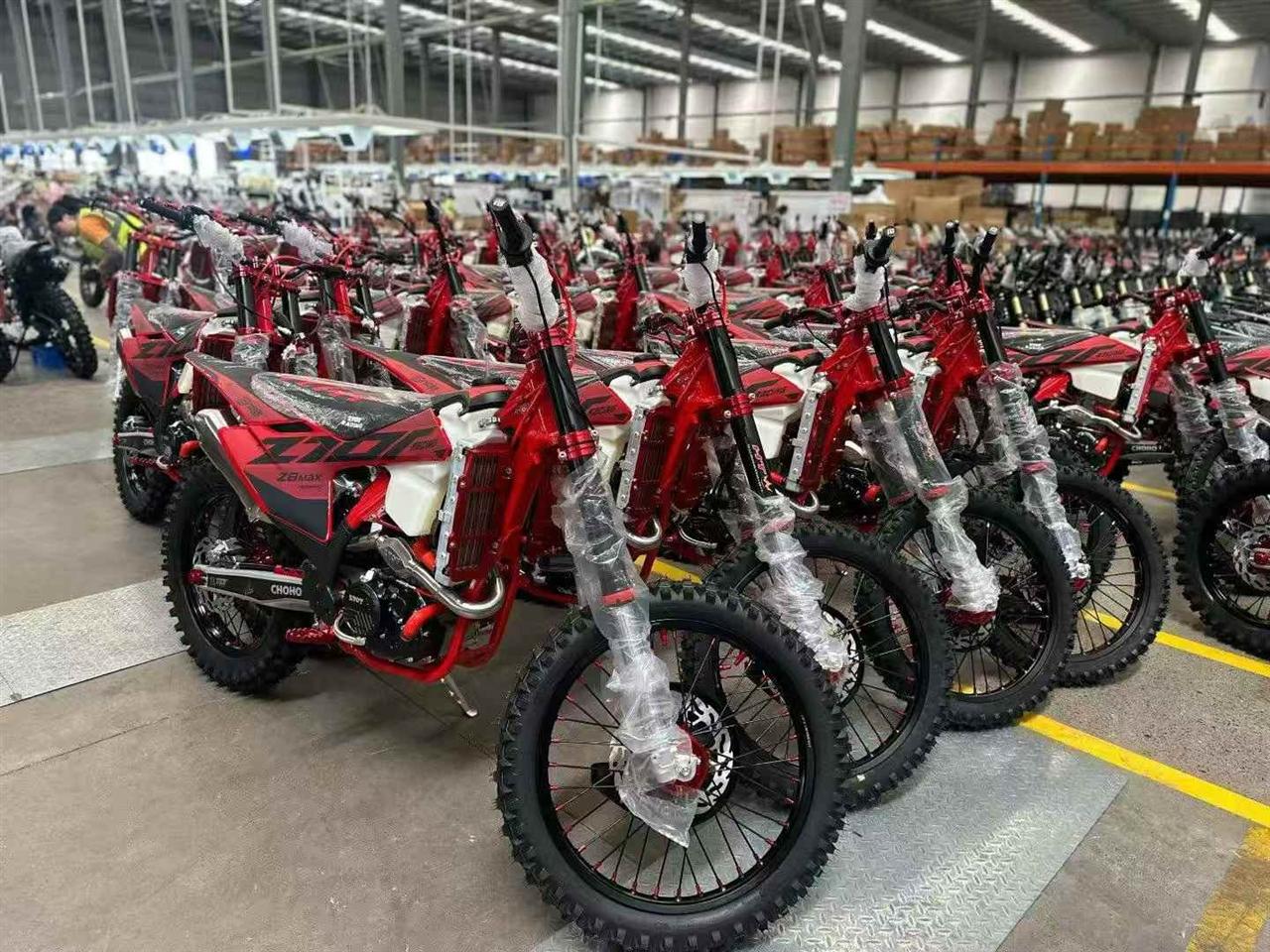
- Start from the models in the container. Every carton should map to a bike that is on the vessel, not to a probability that a customer will ask later.
- Size the fast movers first. Brake pads, levers, chains, sprockets, tubes, tyres, cables and filters are the items that stop a bike earning. Batteries and plastics follow the same logic.
- Fix the part numbers in writing. A quote that says “250 spares” is not quotable. A quote that carries model codes can be checked against the crate labels on arrival.
- Count on arrival, before assembly. Discrepancies resolved after the bikes are sold become a discount instead of a correction.
Cross-referencing between years
The same model name can change suppliers between build years. A dealer who orders parts for “the 2025 bike” and receives a unit built to a slightly different specification will find the parts do not line up. The cheap protection is to record the build year and any configuration notes on the order, then check the crate documentation against that record when the container arrives.
This is unglamorous work, and it is the difference between a parts channel that supports resale and one that generates warranty conversations.
Storing the carton: what a dealer needs before the bikes arrive
A parts carton that lands without a shelving plan becomes a pile. Before the container arrives, decide where the consumables live, label the cartons by model code, and keep the packing list with the parts rather than in an email thread. The workshop needs to find a brake pad set by model within a minute, not by memory.
Two practical habits make this work: record the count on arrival before assembly begins, and keep a running note of which items are consumed first. The first restock order then has real evidence behind it instead of a guess about which consumable disappears fastest in that dealer’s market.
The parts conversation no supplier enjoys
After a container lands, a dealer sometimes discovers that the part they need has a minimum order that exceeds the value of the repair. That situation is created at the quote stage, not at the service desk. If a first order carries a properly built spare carton, the awkward minimum-order conversation mostly does not happen in year one.
FCDC Motor includes the spare-parts line in the same RFQ for this reason — the cartons ride with the bikes, and the quantities can be sized to the models actually shipped.
What FCDC Motor does not promise
No guarantee that a part will fit a bike bought elsewhere. No claim that a competitor’s consumable is interchangeable. No promise of indefinite availability for a discontinued build. Parts commitments are quoted against models FCDC Motor ships, and buyers confirm the destination rules that apply to them.
Frequently asked questions
Can I order parts without ordering bikes?
Parts are quoted against model codes, and the practical route for a first purchase is to attach them to a bike order so they travel on the same freight. A standalone parts order is a different commercial conversation and should be raised on the RFQ directly.
Do you publish a part number list?
Parts are quoted against the model code on the RFQ rather than as a public catalogue, because build-year and configuration differences make a static list misleading.
What should a dealer send to get a parts quote?
The model codes in the order, the build year if known, the fast-moving items they want covered, and the destination. That is enough to quote a carton that matches the container.
Next step
Send the model codes you are ordering plus your consumables list through Get Quote, and FCDC Motor returns a parts line built against those codes, priced separately from the bikes so the comparison stays honest.