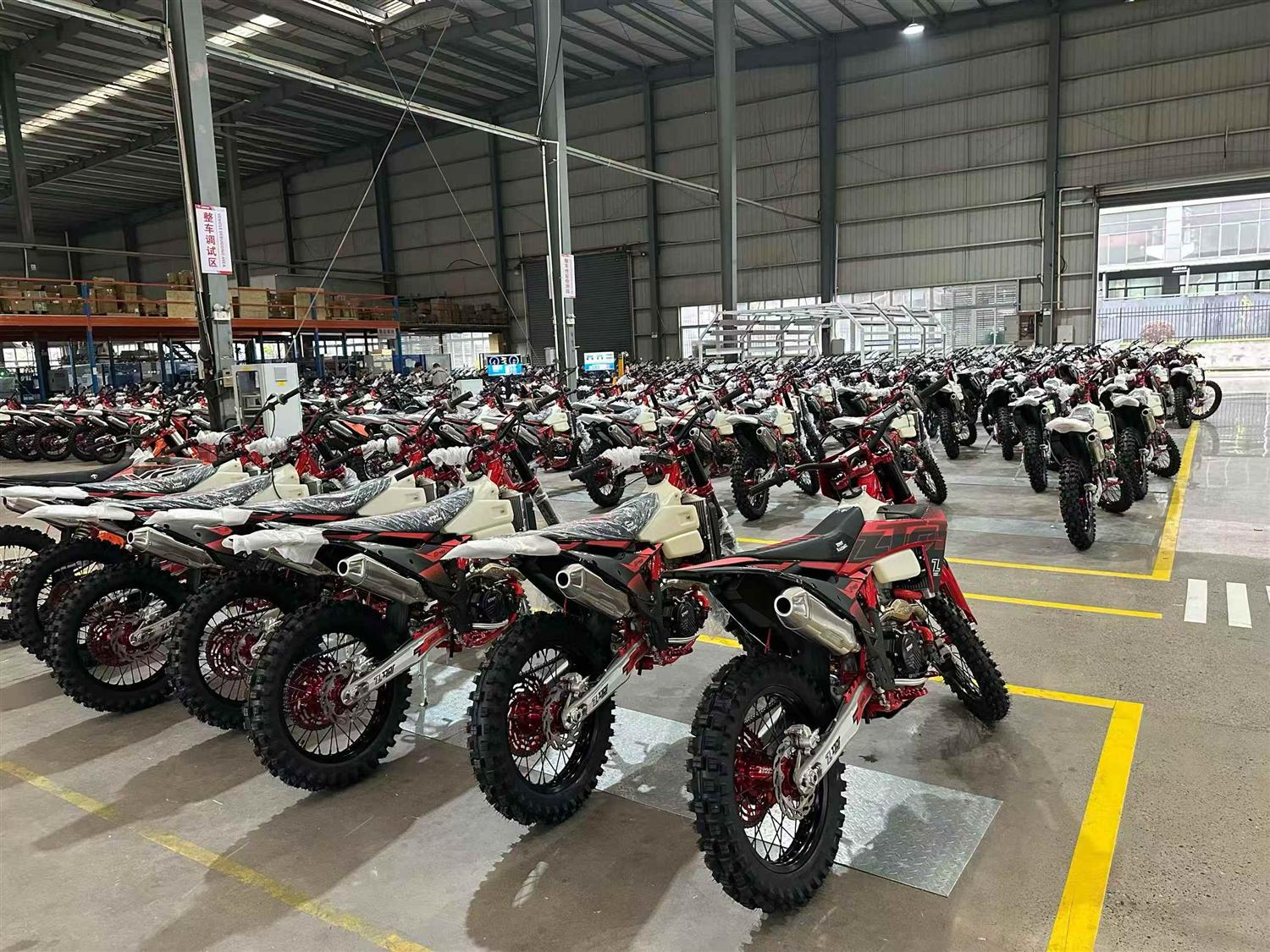
Wiring a factory you have never verified is the single most expensive mistake a first-time importer can make. FCDC Motor publishes a Production Status page with factory videos and sourcing evidence — explicitly a production-status and factory-video library. This article explains how to use that page as part of your verification, and which facts you should still confirm in writing before payment.
Start with the production-status page
The FCDC Motor production-status page is built to show, not just claim: it publishes factory videos and sourcing evidence under a production-status heading. A trading shell rarely maintains a continuously updated factory-video library, so the page is a first signal. Use it as the starting point of verification, not the full proof — a video shows a line exists; it does not by itself prove the unit you ordered comes off it.
What the page can and cannot prove
| Claim | Production-status page supports? | Confirm separately in writing |
|---|---|---|
| A factory exists and runs | Yes — factory videos + status | — |
| The exact model is made there | Partially — sourcing evidence | Model-to-line confirmation |
| Certifications for your market | No — see certificates page | Per-market cert list |
| Your container will be built to spec | No | Sample inspection + PO spec |
The table separates what the page shows from what only a written confirmation settles. We do not assert a factory size or a certification the page does not display; an invented audit claim is worse than a documented gap.
Close the gap with a sample, not a promise
The strongest verification is a sample order. A sample that arrives matching the spec, packing and document pack tells you more than any video. FCDC Motor supports sample orders before wholesale, so the verification sequence is: read the production-status page, request the document pack, sample the actual model, inspect it, then container. Payment follows proof, not the other way around.
Certificates: a separate check
Manufacturing reality and market certification are two different questions. The certificates page on fcdcmotor.com shows what FCDC Motor can supply; whether a given model meets your destination’s requirements is a per-market confirmation you must request in writing. Do not assume a factory video implies a CE, EPA or DOT mark for the unit you ordered — ask for the cert list tied to the SKU.
The verification checklist before you wire
Before payment, your file should contain: the production-status page reviewed, the document pack requested, a sample inspected and matching spec, a written MOQ and model-mix quote, and a per-market certification list for your SKUs. None of these alone is proof; together they turn “I hope this is real” into “I checked, and here is the evidence.”
Red flags that override a good video
A polished factory video does not erase basic warnings. If the supplier refuses a sample, refuses to put the model list and MOQ in writing, or pushes for full wire before any inspection, stop. Those behaviours cost more than a missed deal. The production-status page is a reason to keep talking; it is not a reason to skip the sample, the document pack, or the written quote. Verification is a sequence of small proofs, and each one protects the next.
What FCDC Motor asks of you, too
Verification cuts both ways. The more precisely you state intended market, models and use, the more exact the document pack and certification list we can return. A vague RFQ gets a vague answer; a specific one gets a confirmable one. Send the models, the market and the intended use, and the proof loop closes faster for both sides.
How long verification should take, and why that is fine
A first-time importer sometimes worries that asking for a sample, a document pack and a written quote slows the deal. It does — and that is the point. The few days a sample spends in transit are the cheapest insurance you will ever buy against a container of the wrong or misrepresented units. The production-status page is instant; the sample is the part that costs time, and the time is what makes the rest of the proof trustworthy. Treat the sequence as the product, not the obstacle.
FCDC Motor’s own wholesale flow is built around this sequence rather than around a single wire. The wholesale page leads with model mix and MOQ because the factory expects a planned order, and a planned order is one a sample has already de-risked. Approaching verification as a partnership — you specify precisely, we confirm in writing, you inspect, then you commit — is what turns a scary first container into a repeatable one.
The production-status page is the public face of that partnership: it shows the line is real before any money moves. A buyer who has watched the factory video, received the document pack, and held the sample has three independent proofs, not one supplier’s word. That is the standard we hold ourselves to, and the one we suggest every first-time importer holds any factory to, not just ours.
If the production-status page were ever to go stale or the videos to stop updating, that itself would be a signal worth acting on — a live factory does not stop showing its line. Treat a current, refreshed page as a small but real piece of evidence, and a silent one as a question to raise before wiring. Verification is a habit, not a one-time checkbox, and the page is only the first of several proofs you should keep collecting.
If you want to start verification with a sample and the document pack, send the models and intended market through Get Quote.
How to choose a reliable dirt bike manufacturer in China
The “dirt bike manufacturer China” search returns supplier lists and factory directories, but the real question behind it is the same one a buyer should ask of any factory: can you prove you make the bikes, not just trade them? FCDC Motor is a factory and exporter, and this checklist is the standard we walk importers through before any wire — it works the same whether you are evaluating FCDC Motor or any other factory.
Signals that separate a factory from a trader
| Signal | Factory | Trader / reseller |
|---|---|---|
| Production evidence | Shows production status, workshop or factory capability | Only a warehouse or generic stock photos |
| Engine identity | Names engine code and displacement on the spec sheet | Stock photo with brand name swapped |
| Export documents | Registered company details, packing, Incoterm stated plainly | Vague “certificates available” |
| Parts line | Quotes model-specific parts on the same RFQ | No parts commitment or generic kit |
The practical verification order
- Ask for the production-status page. A factory can show where and how the bikes are built.
- Ask for the build sheet. Configuration and parts list on paper, not just a price.
- Order a sample first. A single-unit sample proves the build before a container commitment.
- Plan parts against the model code. Filters, levers, chains, tubes, plastics tied to the exact model.
- Confirm destination rules. EPA, state registration and licensing confirmed with a broker and local authorities — a supplier should not claim a bike is road-legal in your market without evidence.
FCDC Motor publishes its own production and verification material, and we expect the same standard from any supplier you compare us against. A factory that refuses these checks is telling you more than its website does.
Updated 2026-11-02: added the “choose a reliable dirt bike manufacturer in China” checklist.