
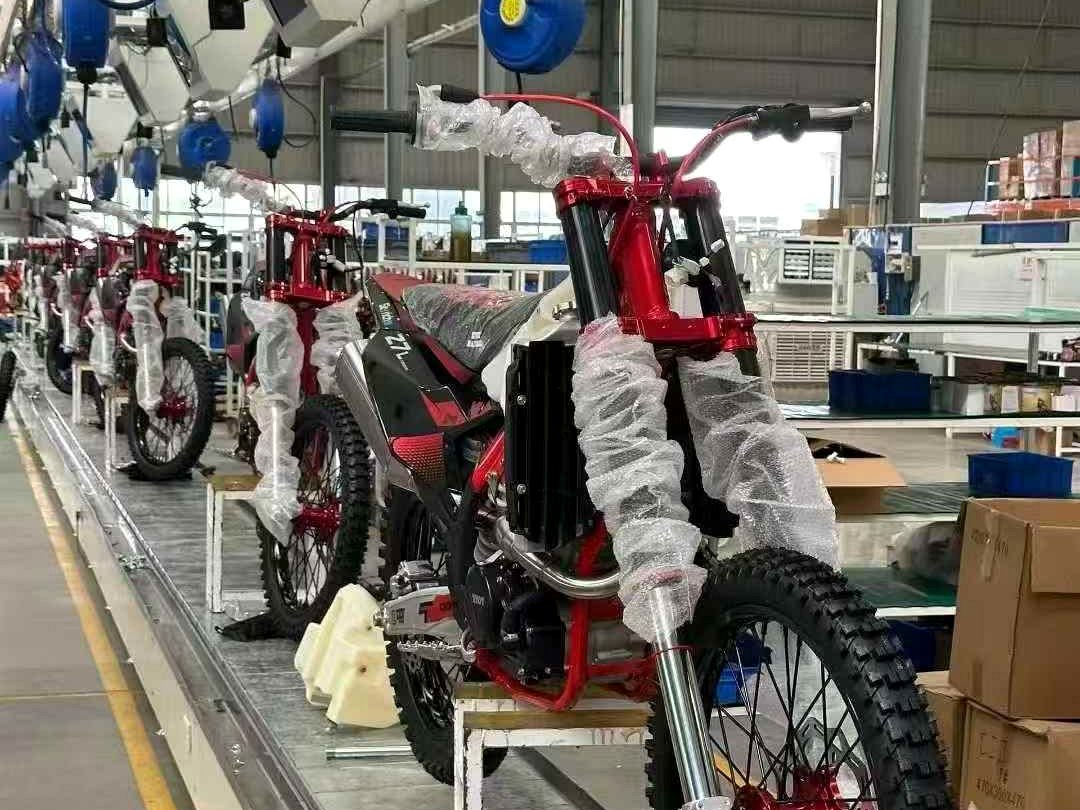
If a forwarder has told you that every motorcycle needs an import approval, read the Australian Border Force page before you budget for one. It says plainly: “Non-road vehicles do not need an import approval.” That line is why a container of off-road bikes can clear without one, and it is the line most often lost between dealer, forwarder and broker.
What the ABF page says, in its own words
The page starts with the category, not the exemption: “A ‘non-road vehicle’ (often referred to as ‘non-transport equipment’ and/or ‘off-road vehicles’) is a vehicle that is not principally designed for road travel and/or is not permitted to be driven on public roads.” Only then does it state: “Non-road vehicles do not need an import approval.” (Australian Border Force, “Importing a motor vehicle”, abf.gov.au, checked 28 October 2026.)
Read together, the test is not the phrase “dirt bike” on an invoice, but whether the unit is principally designed for road travel or permitted to be used on public roads. The same page supplies the contrast in its road vehicle definition: “a road motor vehicle – a vehicle that is designed solely or principally for the transportation of people, animals or goods on public roads or a vehicle permitted to be used on public roads.”
Two boundaries: this is a reading of one official page as published on the date above, not legal advice; the call that counts is the one ABF and your licensed customs broker make on your entry documents.
Why “all motorcycles need an approval” keeps coming back
The conflict is real and rarely dishonesty. A broker asked about “a 250cc dirt bike, 20 units” cannot see design intent, end use or crate contents, so the safe reply is the road vehicle default. The page shows why that default exists: “If a road vehicle assembly or component being imported bears a road vehicle identification chassis number and is to be reassembled for use on public roads, then an import approval is required.” A blanket yes protects them; it can cost you an application you never needed.
The way out is documentation: frame list, end use in writing, assembly state. Then the question stops being hypothetical.
Road or non-road: what actually decides it
No row settles it alone; together they form the file you hand to a broker or the department.
| What you check | Leans non-road | Leans road vehicle |
|---|---|---|
| Stated end use in the order | Competition, track, farm or private property | Buyer will register it for public roads |
| Road history in the origin market | Never registered, no public road permit | Registered or permitted for road use |
| Frame or chassis number | Off-road identifier, no road vehicle identification chassis number | Bears a road vehicle identification chassis number |
| Assembly state on arrival | Stays as shipped, used off public roads | Crated, to be rebuilt for public road use |
Chassis number and assembly state flip the answer
Both are fixed before the vessel sails. A crate of competition bikes with off-road frame numbers, sold to a dealer who keeps them off public roads, follows the non-road line. The same model arriving as a knocked-down assembly, carrying a road vehicle identification chassis number and destined for public road registration, falls under the reverse condition quoted above.
So the question is not whether dirt bikes are exempt, but what number is stamped on the frame and what happens after clearance. If those point different ways, slow down before booking.
When the page is not enough: ask the department
The page anticipates the grey zone: “However, if there is any uncertainty that a vehicle is a non-road vehicle the Department of Infrastructure, Transport, Regional Development and Communications can assess whether the vehicle requires an import approval or determine that they are not road vehicles.” For a mixed container or a new model, that assessment is worth the wait. The page notes import approval applications are generally assessed within 30 working days, a reason to start early, not a promise about your file.
Before the container leaves: documents and value basis
On our desk, a quote is not signed off until three things sit in the file: the end use the buyer states in writing, a chassis list with one line per unit matching invoice and packing list, and the Incoterm plus value basis the commercial invoice will use. On an FOB quote we keep freight and insurance as separate lines outside the goods price; on a CFR or CIF quote they are inside the number, and the invoice has to say which basis it is. We will not let a supplier fold freight into a unit price and still call it FOB: a broker has to unpick that at the border, and the buyer pays for the delay.
The page lists the cost items it says importers should consider: pre-shipment costs (e.g. removal of asbestos, steam cleaning for biosecurity), freight and insurance, customs duties, GST and LCT, storage and delivery charges, customs brokers’ charges, import processing charges, wharf and transport charges. We publish no numbers against them: rates and concessions depend on the goods, value and entry, and an invented figure is worse than none. Ask the supplier in writing which of those the unit price covers and which appear only on your broker’s invoice.
Documents to agree before departure: commercial invoice whose description matches the crate, packing list, chassis and engine number list, bill of lading description, origin documents, and any pre-shipment treatment record. If a unit is presented as non-road, invoice and end-use statement must say so consistently, and only if true.
What our own content covers, and the Australia gap
FCDC Motor publishes market material for Saudi Arabia, ASEAN under ATIGA, Brazil and Manaus, Africa spare parts and EU small parcels. There is no dedicated Australia page, and this article does not pretend to be one. The general pieces cover the mechanics: customs and import flow, the wholesale import guide, the duty and HS code cost sheet, certificates we can supply, and the sample to wholesale ladder. None decides an ABF classification or replaces your broker.
If the unit sits near the line: confirm end use, collect frame numbers, fix assembly state, ask the broker in writing with those attachments, then use the department assessment if the answer is still open. FCDC can supply the document pack; the classification call stays with ABF and your broker. That sequence costs emails. Getting it wrong costs a container sitting at wharf.
FAQ
Do dirt bikes need an import approval to enter Australia?
Under the page quoted here, a vehicle not principally designed for road travel and not permitted on public roads does not need an import approval. A competition or private-property bike normally sits there; one intended for road registration does not.
My forwarder says every motorcycle needs an approval. Who is right?
Both can be true of different shipments. The exemption is tied to the non-road definition, not to the word “motorcycle”, so a blanket answer is a default, not a finding. Resolve it with end use, frame numbers and assembly state, then the department assessment if doubt remains.
Does a crate of road-legal enduro bikes need an approval if the buyer will rebuild them?
Look at the frame and the plan. The page states that an assembly or component bearing a road vehicle identification chassis number, to be reassembled for public road use, requires an import approval. If yours carry such numbers and the buyer intends road use, treat it as a road vehicle question before ordering.
If you are shipping to Australia and want the pre-shipment document pack checked against your actual model list, send the models, frame numbers and intended use through Get Quote.