KTM opened its own assembly plant in Brazil’s Manaus free trade zone on 14 October 2026, having previously relied on an external partner for Brazilian assembly, and stated that the plant’s output supplies the Brazilian market only (MXNEWS-Online, 16 October 2026). The useful part of that news is not Brazilian. It is what a locally assembled unit does to a full-bike quote sitting on a buyer’s desk in the same region. If your offer is a CBU price and the unit beside it was assembled inside a customs territory with its own rules, you are not in a price negotiation. You are in a trade-form negotiation you have already lost.
The Manaus signal, read through two customs territories
A brand does not build an assembly line for a market it can serve from a container. It builds one when moving finished units across a border costs more than moving components and assembling inside. KTM’s move follows that logic, and the detail that output serves only the domestic market tells you the plant is a tariff and logistics instrument rather than an export hub.
What that means for an independent importer is narrower than the headlines and more useful. You will not out-price a brand with a local plant on a CBU basis. You can compete on the form that fits your own volume: assembled units for the models that turn, kits for the models your customers rebuild anyway. That is a decision table, not a slogan.
The Manaus free trade zone and the Tierra del Fuego special customs area, meanwhile, are two separate regional development and customs territory arrangements, each understood within the Mercosur framework rather than as instances of a single Latin American free zone (Aduana News, 18 September 2026, citing SUFRAMA data). Incentives attach to a territory and to an approved project inside it. They do not attach to a supplier relationship, and they do not transfer between the two.
This is where enquiries go wrong most often. A dealer reads about Manaus, asks whether he can get the same treatment for a warehouse elsewhere in the region, and the answer is no: the treatment belongs to the territory. What you can do is pick a formation whose fixed cost your own market can carry, and leave the free-zone question to a partner who is genuinely established inside one. FCDC Motor has no factory, warehouse or joint venture in Brazil or Manaus, so anyone offering you that arrangement in our name is not offering ours.
Where each formation changes your cost lines
| Cost line | CBU | SKD | CKD |
|---|---|---|---|
| Goods basis | Finished vehicle value | Component kit value | Component and raw-part value |
| Freight per unit | Highest, because the whole machine is shipped | Lower, because crates pack denser | Lowest per unit, highest per shipment complexity |
| Duty basis | The finished vehicle line, as your broker applies it | The kit as declared | Each component line as declared |
| Certification work | Type documentation for the finished model | Documentation for the kit and the assembled unit | Documentation for components and the assembled unit |
| Labour and facility | None on your side | Assembly bay, jigs, trained staff | Full line, tooling, quality control, line-side spares |
| Working capital | Fastest cycle | Slower, because assembly consumes time | Slowest, because components arrive in waves |
| Parts depth | Service kit only | Service kit plus assembly consumables | Full component stock and line-side inventory |
| Exit cost | Sell the stock | Sell the jigs with the stock | Write down tooling if the model changes |
The table’s message is that CKD is not a cheaper CBU: it is a different business with a fixed cost floor, paid whether or not the units sell.
Volume and exit difficulty: when assembly stops paying
Assembly stops paying at the point where fixed cost per unit stops falling. Jigs, floor space, trained staff, quality control and homologation for a locally assembled unit are all fixed, justified by throughput across the model life rather than by one order. A dealer who cannot keep a line busy pays that fixed cost out of margin, and the margin does not return when the model is replaced.
Exit difficulty is the part nobody quotes. A CKD commitment usually brings tooling, a packaging specification and a minimum kit order into the relationship. Leaving means writing down tooling and selling an inventory sized for a line. Ask what the exit looks like before asking what entry costs.
Container maths for a first off-road shipment
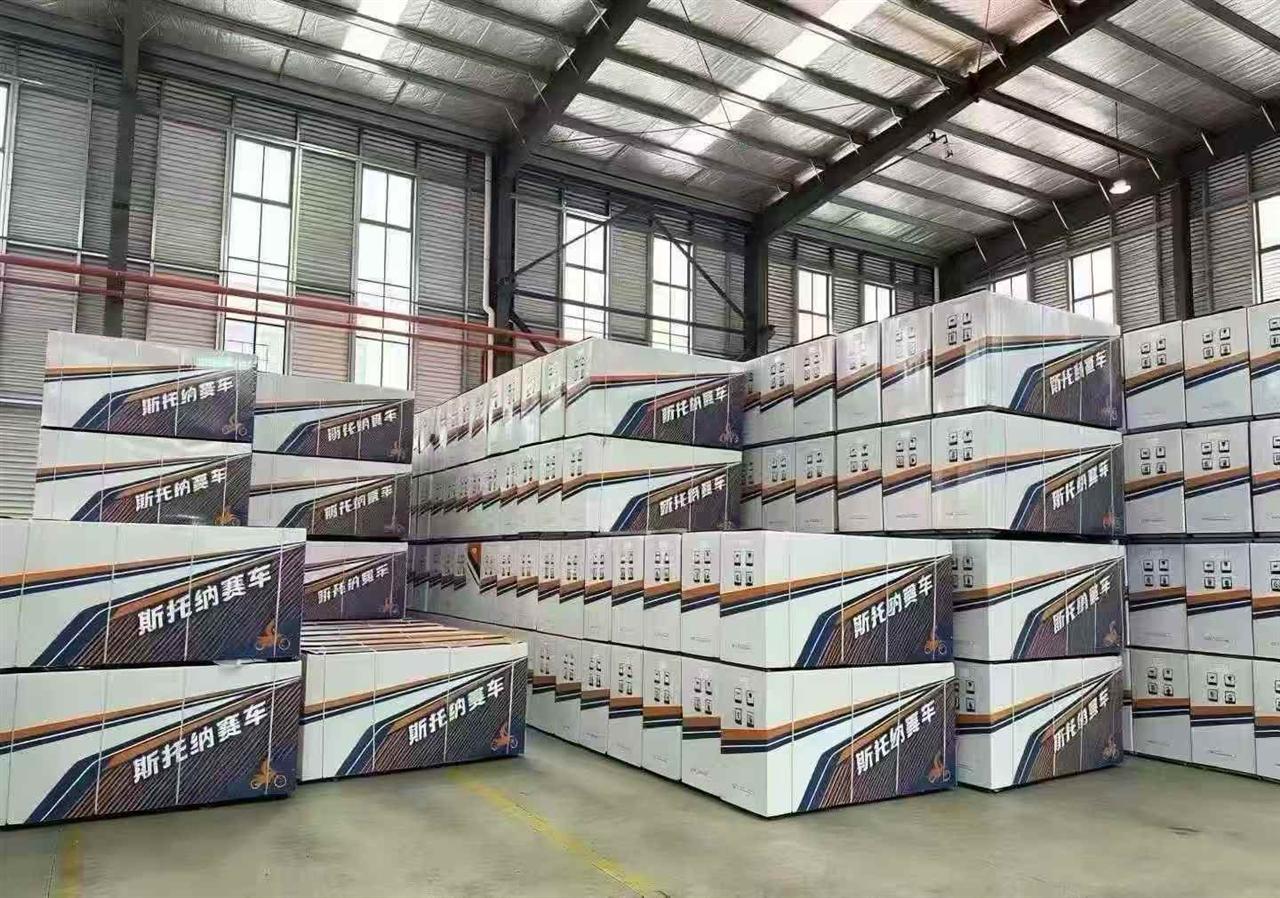
Units per container is a function of crate dimensions, whether handlebars and front wheels come off, how many model rows you mix, and how much space the parts kit occupies. Our per-model loading counts publish that arithmetic model by model, because a single headline number would be wrong for almost every real mix.
The failure we see most often is planning the container on bike count alone. A dealer approves a loading plan of bikes, then adds a parts kit and a demo unit, and finds the arithmetic no longer fits. The kit then travels by air or waits a quarter, and the season opens with a workshop that cannot service what it sold. Build the plan from the kit outward: kit and demo first, bikes into the space that remains.
What to settle before a CKD transition
The route from samples to a kit form is deliberately slow at the start and fast at the end, and the pace is set by what your own market proves rather than by what we would like to sell. The steps we can put in writing are the prepaid sample units, the CBU order, OEM and customization scope, the certification documents for the units you buy, and a confirmed lead time from deposit to booking; the kit, the tooling and the bin sequence belong to whoever supplies and staffs the assembly line, not to us. The customization scope sits on the OEM and customization page, and the document package is described under certificates.
One internal note on transition orders: the kit packing list is the document that decides whether your assembly bay works or stalls. If bins are not labelled in the order of assembly, your technicians spend the first week sorting instead of building, and the fixed cost you were trying to escape reappears as idle labour. That is the reason to ask for the kit list in assembly order, because a supplier who hands over an alphabetical bin list has never stood in an assembly bay. Before any kit order, make sure the party supplying the kit is the party who will stand behind the bin sequence.
FAQ
Do I need a Manaus or Tierra del Fuego presence to compete in Latin America?
No. Those are two separate customs territory arrangements, and incentives attach to a territory and an approved project inside it. An importer outside them competes on formation choice, model mix and service, not on a free-zone address.
At what volume does CKD make sense?
When throughput can carry the fixed cost across a model life: tooling, space, trained staff and documentation for a locally assembled unit. That threshold depends on your market and your partner, so we work it out from your numbers rather than quoting a figure we cannot support.
Does FCDC Motor assemble bikes in Brazil?
No. FCDC Motor has no factory, warehouse or joint venture in Brazil or Manaus. We supply CBU from China, with the packing list, the documents and the lead time confirmed per order; an SKD or CKD structure is a decision your assembly partner and your broker own, not something we can claim on our own.
If a CKD transition is on the table, it starts at Get Quote: name the market, the model family and what already exists on your side, and the formation recommendation follows from that.