
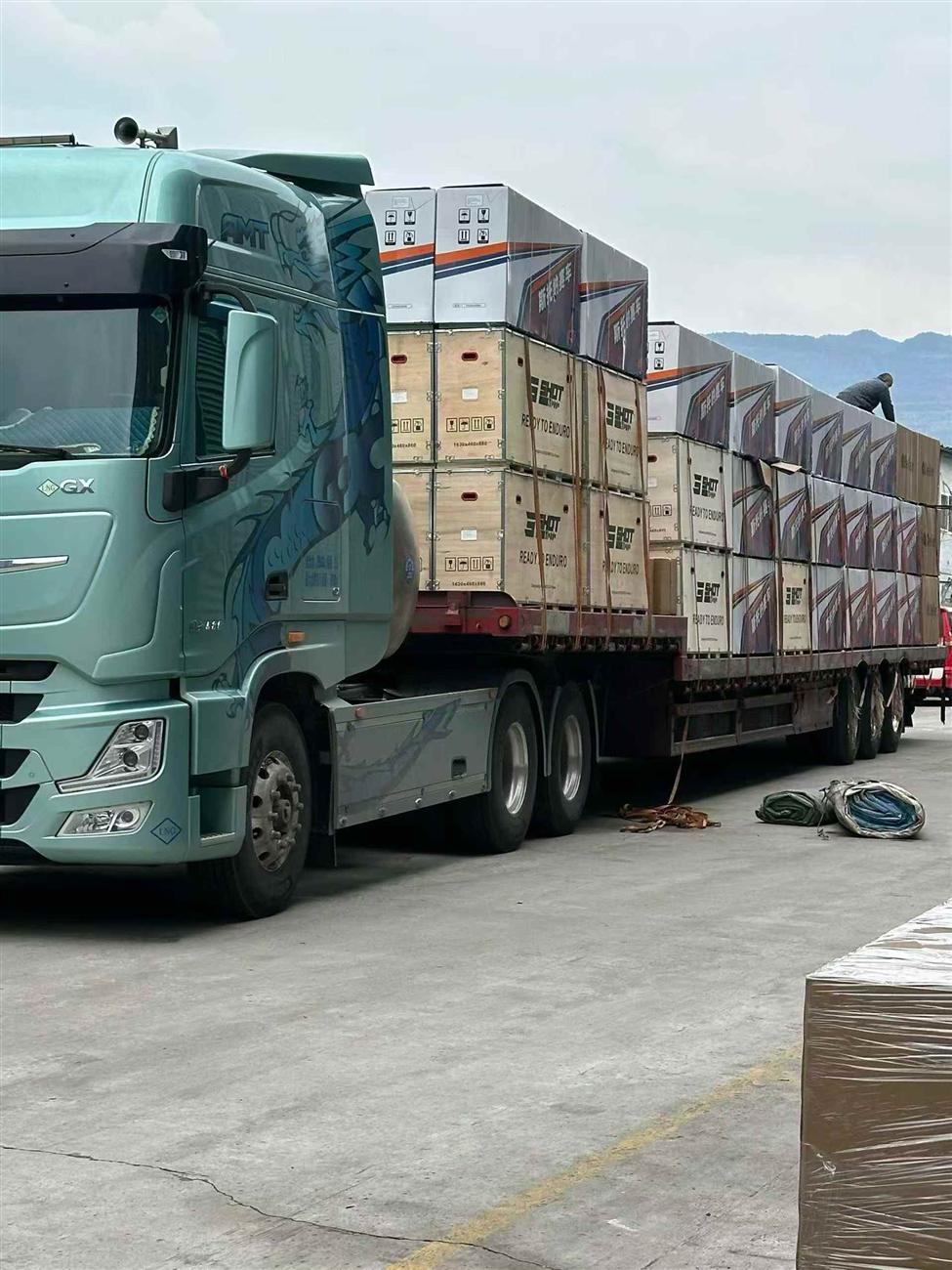
Short answer first: the numbers you see on most supplier pages, 8–12 bikes in a 20ft, 18–25 in a 40ft and are averages, not plan facts. When FCDC Motor loads a mixed container, the real count depends on which model family is inside, because crate width, handlebar fold and wheelbase change how many crates stack per row.
What actually moves the count
A 20ft container has roughly 5.9 m of usable floor length. A full-size 250cc crate sits around 1.7–1.8 m long, so you get three crates per row with a small gap; two rows plus a partial third is where the “8–12 bikes” range comes from. A 125cc pit bike crate is shorter and narrower; the same floor takes four per row and the count climbs past 12. An electric off-road model like the HEZZO D9 at a 1,300 mm wheelbase packs tighter still, but the battery crate adds weight limits before space limits bite.
Where the destination also has assembly-form rules, the crate plan and the duty question have to be read together, and FCDC Motor covers the second half in the Brazil import duty and Manaus free trade zone CKD guide.
The variable dealers forget: handlebar position. Crates with bars turned and tied fit side by side; crates with bars removed to save width cost you 15–20 minutes of reassembly per unit at destination — a cost your workshop absorbs, not the freight forwarder.
Per-model planning table (FCDC Motor export practice)
| Model family | 20ft realistic count | 40ft HC realistic count | Loading note |
|---|---|---|---|
| BSE PH02 125cc pit bike | 14–18 | 34–44 | Densest packing; bars tied |
| KAYO K2 PRO 250cc | 9–11 | 22–27 | Full-size crate, 21/18 wheel setup |
| KAYO T4L / BSE J11 300cc | 8–10 | 20–24 | Longest wheelbase in the lineup |
| HEZZO electric (D5–D9) | 8–12 | 20–30 | Battery weight governs the last row |
| Mixed gasoline + electric | Case by case | Case by case | Battery segregation rules add planning time |
Ranges, not promises: the final count is confirmed per order against the actual crate drawing for the model and configuration you buy. Send your model mix on Get Quote and FCDC Motor returns the crate plan with the quote.
The mistake that costs a second container
The most expensive loading error we see is a dealer booking a 20ft “for 10 K2 Pros” from a web page, then adding two T4Ls and a spare-parts crate after the quote. Full-size 300cc crates push the count to 9, the parts crate eats a half row, and the last two bikes roll to the next vessel, three weeks later, at single-unit LCL rates that cost more than the original freight slot.
Lock the model list before you book freight. If the mix is not final, ask for the quote with a 10–15% capacity buffer noted in writing rather than assuming the container will stretch.
Questions FCDC Motor will ask before confirming a loading plan
- Exact model list with quantities — not “250cc class, around 10 units”.
- Spare-parts crate yes/no, and whether it rides in the same container.
- Destination port and any inland leg, since a bonded transfer can change the packing order.
- Whether bars-and-mirrors stay fitted or come off for density.
- For electric models: battery documentation status, because UN 38.3 paperwork affects which vessels accept the cargo.
FCDC Motor publishes these counts from packing records, not from a capacity calculator. If your freight forwarder quotes a different number, ask them for the crate drawing they used, then send it to us and we will reconcile it before you pay for the slot. Start at Get Quote with the model mix and destination port.
Effective MOQ, quantity bands and the per-unit number
A container math question has a partner question that buyers skip: not “how many can I get in” but “how many do I have to order to reach each price tier”. FCDC Motor quotes reference FOB tiers that step down as the quantity band widens — for example a given model at a 1-3 piece tier, a lower price at a 3-8 piece tier, and the lowest tier from 8 pieces on. That means the per-unit number on your screen depends on the band you commit to, and a container that just clears the top of a low tier can cost more per bike than a slightly larger order that reaches the next tier. Work out the effective MOQ backwards: decide the tier your storage and cash flow can absorb, then size the container to that tier, not the other way around.