
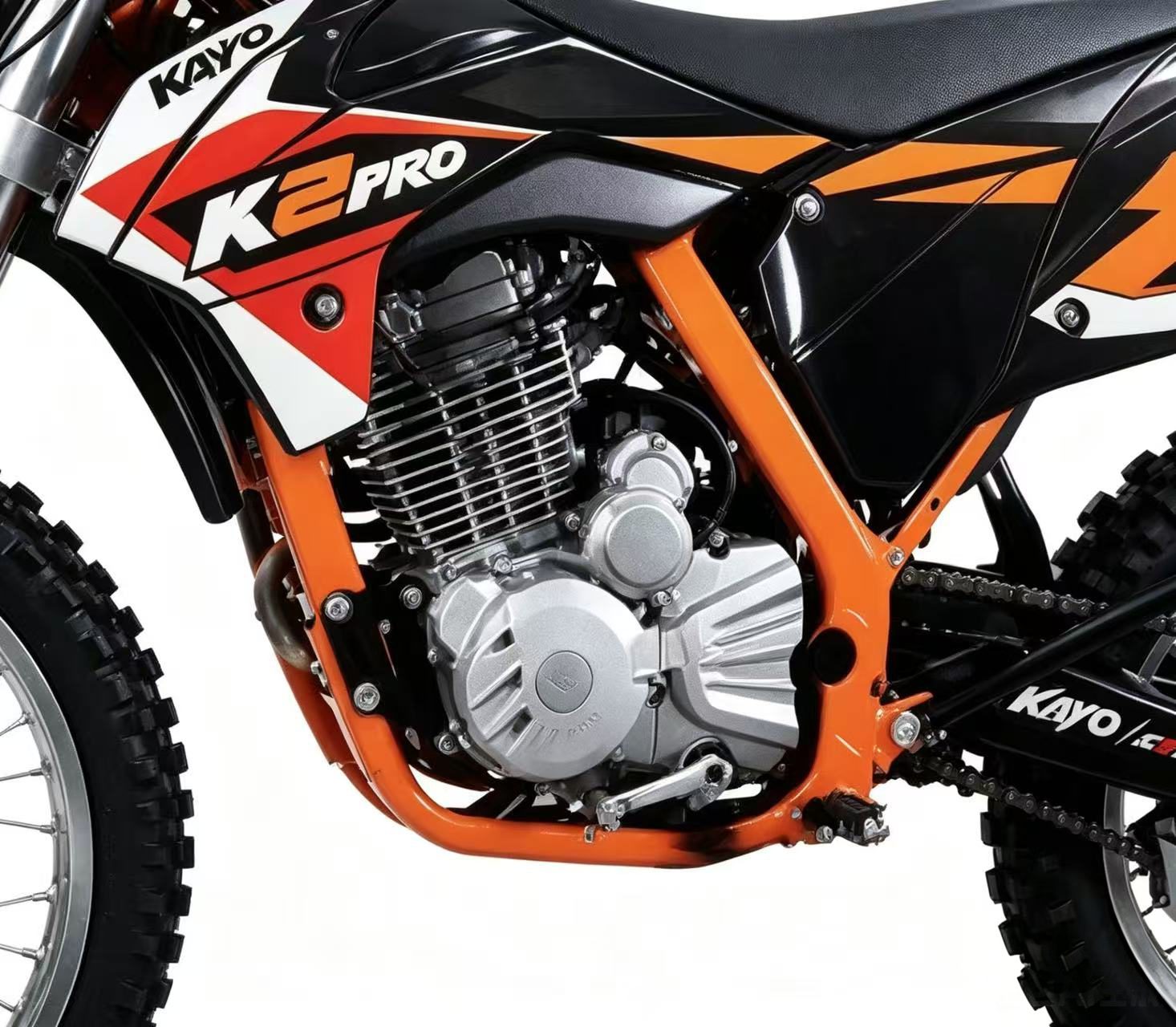
Build your 250cc off-road range around the exact bike your customers need. This FCDC Motor guide brings together the published KAYO K2 PRO specifications, model comparisons and information to prepare a dealer, importer or fleet enquiry.
Published KAYO K2 PRO specifications
The figures below are listed on the FCDC Motor product page. Confirm the model year and supplied configuration in the written quotation before ordering.
| Displacement | 249.9 cc |
|---|---|
| Maximum power | 14 kW / 8,500 rpm |
| Maximum torque | 18 N·m / 6,500 rpm |
| Wheels, front / rear | 21″ / 18″ |
| Fuel tank | 6.7 L |
| Listed weight | 108 kg |
| Starting | Electric and kick start |
View KAYO K2 PRO product specifications
Choose the model for your dealer range
Compare rider fit, local demand and service capacity before deciding quantities. K2 PRO is a full-size 250cc-class option; use the BSE M5 comparison for an alternative in this class and the KAYO T4L product page for a 300cc-class comparison. Displacement alone does not determine suitability or margin.
What is the KAYO K2 PRO top speed?
This guide has no verified top-speed test for the supplied configuration. Gearing, rider load, terrain and setup affect the result. If speed is important to your customers, request the exact configuration and a documented test basis with your enquiry. This is a procurement guide based on published specifications, not a hands-on riding review.
Prepare your sample or wholesale enquiry
Send these details together so FCDC Motor can check the proposed order and quote on the same basis as your purchasing team.
- Model and quantity: name the bike, model year or engine reference, units per model, colours and whether this is a sample, trial batch or replenishment order.
- Destination and freight: give the country and port or delivery city, preferred EXW / FOB / CIF basis, and any packing or assembly requirements.
- Parts and support: list the wear parts, service documents and after-sales information your workshop needs; ask which items and costs are included.
- Purchasing requirements: share your target delivery window and required documents. Confirm availability, MOQ, lead time and applicable documents in the quotation.
Compare landed cost, not only unit price
Compare quotes for the same configuration and quantity. Include packing, freight, destination charges, duties and taxes, local assembly, spare parts and a service allowance in your own budget. The final amount depends on your route and order; the page price is not a delivered-cost offer.
Tell us the intended use and destination. Product documents and any road-use eligibility must be checked for the exact model and market.