Quick answer: KAYO is usually the stronger lead when a dealer wants a recognizable off-road brand ladder from TT150 to K2 PRO and T4L. BSE is useful when the catalog needs practical value-focused pit-bike, 250cc, and 300cc options. Neither brand is automatically “better.” The right choice depends on the exact model, landed cost, local rider demand, parts plan, and the dealer’s ability to explain the differences. FCDC Motor uses this FCDC page as the brand-level BSE vs KAYO owner.
BSE vs KAYO dealer stocking matrix
| Inventory role | KAYO path | BSE path | Dealer decision |
|---|---|---|---|
| Entry / training | KAYO TT150 | BSE PH02 125cc | Compare chassis size, rider fit, training use, service needs, and the step-up path rather than displacement alone. |
| Core 250cc | KAYO K2 PRO | BSE M5 250 | KAYO supports name recognition; BSE supports value positioning. Confirm current quote and parts for each exact SKU. |
| Higher-spec 250cc | KAYO D3 | BSE M4 NC250 | Use published cooling, suspension, size, and engine data to define the real role. |
| 300cc-class step-up | KAYO T4L 2026 | BSE J11 | Choose by market price band, rider experience, service capability, and exact configuration. |
What the KAYO K2 PRO and BSE M5 example really shows
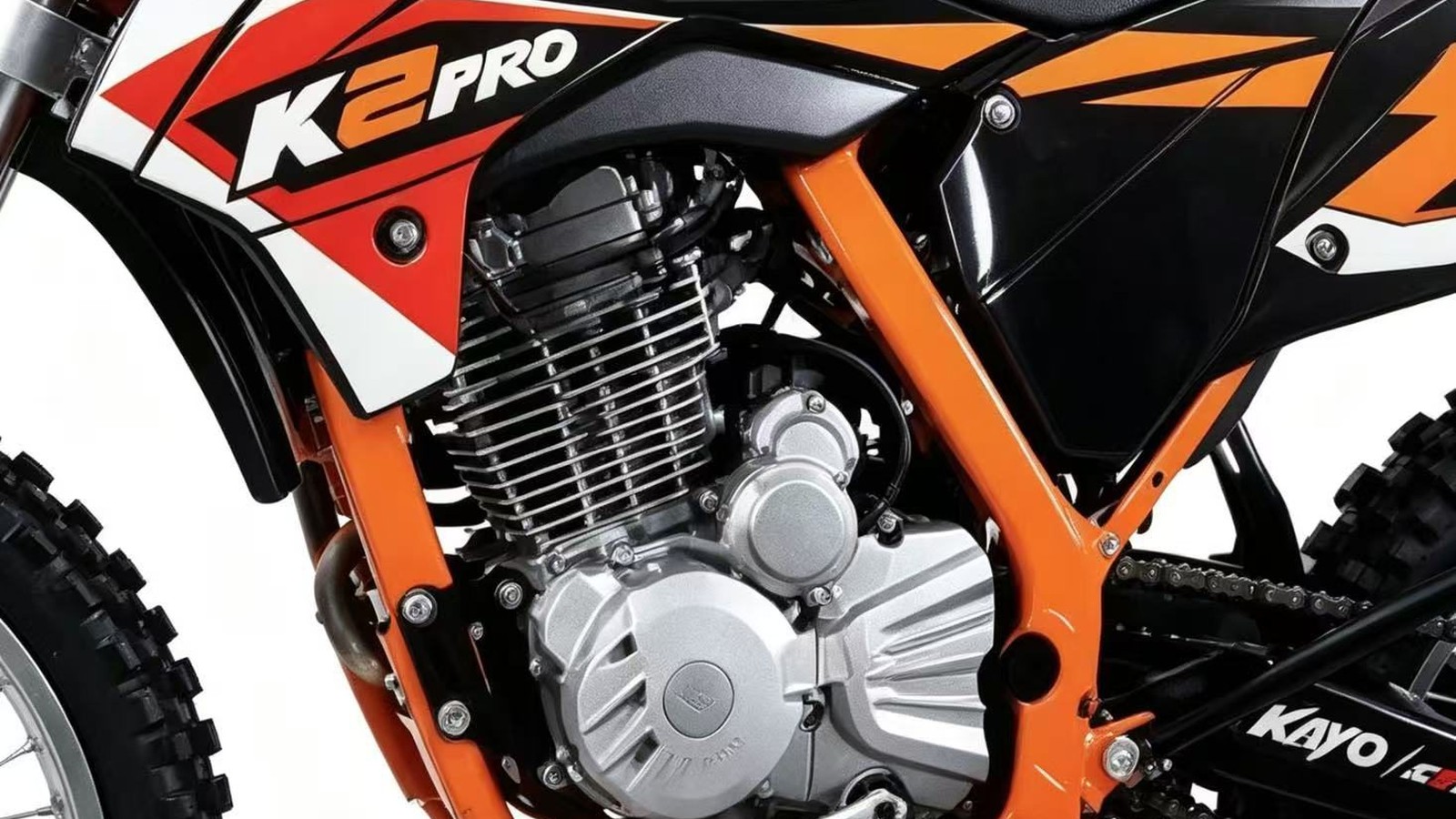
The most searched comparison is often a core 250cc decision. The published FCDC Motor product pages list the KAYO K2 PRO at 249.9cc, 14 kW, 18 N.m, 21/18-inch wheels, electric plus kick starting, and 108 kg. The BSE M5 page lists a 223cc/250cc CB250-based configuration, 12 kW, 17.5 N.m, 21/18-inch wheels, 930 mm seat height, and 112-115 kg. Those values show two different product positions, but the final quotation must confirm the exact engine and configuration being offered.
KAYO K2 PRO is the cleaner choice when the buyer already searches the KAYO model name and wants a recognizable 250cc anchor. BSE M5 can make sense when the dealer needs a simpler value story for trail, farm, and practical recreational use. Use the exact-model comparison before turning that brand impression into an order.
Five costs dealers should compare beyond unit price
- Freight and packing: carton or crate dimensions, disassembly level, CBM, and loading plan affect landed cost.
- Preparation: assembly, fluids, fastener inspection, battery preparation where applicable, and pre-delivery checks need local labor.
- Parts: first-service items and likely wear parts affect uptime and customer confidence.
- Warranty reserve: the dealer needs a documented evidence and claim workflow, not a vague promise.
- Inventory turn: a cheaper motorcycle that sits unsold can cost more than a focused model with clearer local demand.
Parts and after-sales questions to ask both brands
- Which engine and chassis configuration is tied to the quoted SKU?
- Which air filters, oil filters if fitted, brake pads, levers, cables, chains, sprockets, tubes, bearings, seals, and plastics should accompany the first order?
- Which parts are shared across models and which are model-specific?
- What evidence is required for a warranty claim, and who approves the next action?
- Which service documents and assembly checks can be provided for dealer preparation?
When to stock both BSE and KAYO
A mixed lineup can work when each model has a clear role. One practical structure is an approachable entry model, one core 250cc model, and one 300cc-class step-up. Do not fill a container with several motorcycles that answer the same customer question. FCDC Motor recommends assigning a buyer profile, retail price band, service plan, and reorder signal to every SKU before increasing the mix.
B2C rider fit still matters
Dealers buy inventory, but riders decide whether it feels right. Seat height, wheel size, weight, starting system, terrain, experience, and local off-road access matter more than brand name alone. Do not describe a motorcycle as suitable for a child or beginner without checking the exact model, rider supervision, local rules, and the manufacturer’s guidance.
BSE vs KAYO quote checklist
Send FCDC Motor the target country, rider segment, expected retail band, preferred BSE and KAYO models, quantity, sample or bulk path, trade term, packing needs, and first-order parts expectations. FCDC will use the current product and supplier information to confirm the shortlist instead of forcing every buyer into the same brand answer.
Build a BSE and KAYO inventory comparison
Ask for an exact-SKU model matrix and current quote for your market.