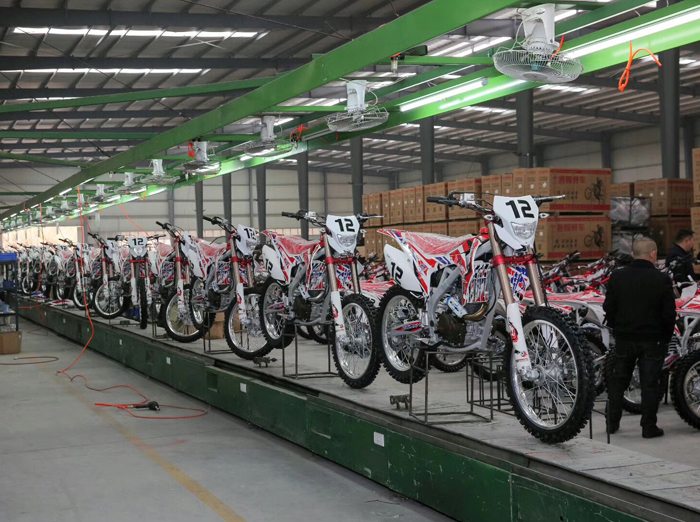
The ratio question, answered directly: for a first mixed container of gasoline dirt bikes, FCDC Motor plans a spare-parts budget in the 8–15% band of the container’s goods value, weighted toward consumables. Below 8% you will air-freight something within two months; far above 15% your cash sits in slow shelves. The band moves with your model mix and how far the destination is from any parts distributor. The reasoning matters more than the number.
Why the ratio is a band, not a formula
Two dealers both ordering ten 250cc units need different kits. The first sells to trail riders who service their own bikes: filters, levers, and grips move, engine internals do not. The second runs a rental fleet where clutch levers and footpegs break weekly and tires wear at triple rate. Same container, different ratio. What stays constant is the shape of the kit: consumables first, crash parts second, internals last.
The same band logic shifts once the fleet is electric, and FCDC Motor documents that case in the electric motorcycle spare parts availability guide for African importers.
Electric stock shifts the same logic toward controllers, chargers and battery spares, and FCDC Motor documents the European spare-parts and warranty commitments for Chinese electric motorcycles on a separate page.
The three SKUs that decide your first-month reputation
Air filters. The single most-missed consumable. A dealer who stocks two filters per bike sells service intervals; a dealer who stocks none sells excuses. They cost little, they weigh little, and they are model-specific. Order them with the bikes so the part numbers match the shipment.
Brake pads and levers. First-month beginners destroy levers before anything else, and pads wear fastest on entry riders who ride the rear brake. One full set of pads per two bikes plus four spare levers per ten bikes is the floor we plan against.
Chain and sprocket sets. The pair wears together; stocking one without the other is a half-fix that generates the warranty email you do not want. One set per three to four bikes for retail sales, one per two bikes for rental duty.
Kit shape we plan for a first mixed container
| Line | Share of parts budget | Note |
|---|---|---|
| Consumables (filters, plugs, oils, grips) | 40–50% | Moves fastest; sell-through inside 60 days |
| Crash parts (levers, pegs, bars, plastics) | 25–35% | Weight rises for rental fleets |
| Wear pairs (pads, chains, sprockets) | 15–20% | Match to model, not to class |
| Engine internals | 0–5% | Order on demand; do not guess |
The parts crate rides inside the motorcycle container, a half row at most — which is why FCDC Motor asks whether a parts kit travels with the bikes before the loading plan is confirmed in Get Quote.
Two mistakes we see in first orders
Ordering parts “for 250cc” instead of for the model. Brake pads and filters are model-fitted. A kit bought to class fits nothing on the floor. FCDC Motor builds the kit against the exact model list you order, and the crate list references the same part numbers as the bikes, which is what your mechanic needs when the first customer waits at the counter.
Zero stock on purpose, “we’ll order when something breaks.” Air-freighting a $12 air filter costs $60–90 in courier fees and three weeks of customer patience. The parts kit is not an inventory investment; it is customer-retention insurance with a known premium.
For electric models the shape shifts: controllers, throttles and chargers replace the wear-pair line, and battery-related spares travel under the same documentation rules as the bikes themselves. Tell FCDC Motor the model mix and the retail-vs-rental split on Get Quote and the kit plan comes back with the quote.