Your first Saudi season is decided at the parts bench, not on the showroom floor. Segway Powersports opened its first GCC flagship store in Riyadh on 2 July 2026, positioned as the brand’s main Gulf retail and customer experience centre, with the Super Villain SX20T side-by-side launched at the same event (Powersports Business, 7 July 2026). A dealer running two service bays cannot match that floor, that signage or that demo fleet. What you can beat is the month after a customer’s first desert ride: whether the air filter is on your shelf, whether the wheel bearing arrives with the next container, and whether the bike is back on the dune next weekend.
What the Riyadh opening does and does not change
A flagship store sells an experience: a clean floor, a branded welcome, a fleet to sit on and a finance desk. The proposition a smaller dealer can actually win is uptime for the machines already sold. In desert use the buyer stops comparing brochures after the first month and starts comparing workshop time. Almost every enquiry the FCDC Motor export desk has taken from Gulf dealers this year has been a variation on that: which dust-prone parts to stock, what fits in a first container, and how fast a replenishment order can move.
Dust reaches the intake before heat reaches the engine
Sand does not attack a dirt bike evenly. It attacks the parts that move against a sealing surface, and it attacks them in a dependable order. Fine dust passes an oiled foam filter that was oiled too lightly, then polishes the intake tract and the valve seats. It migrates through vented hubs and past worn seals into wheel bearings, where it turns grease into lapping compound. It lodges in chain rollers and works as a grinding paste between pin and bush. It packs radiator fins solid, and a packed core stops shedding heat long before ambient temperature becomes the limiting factor.
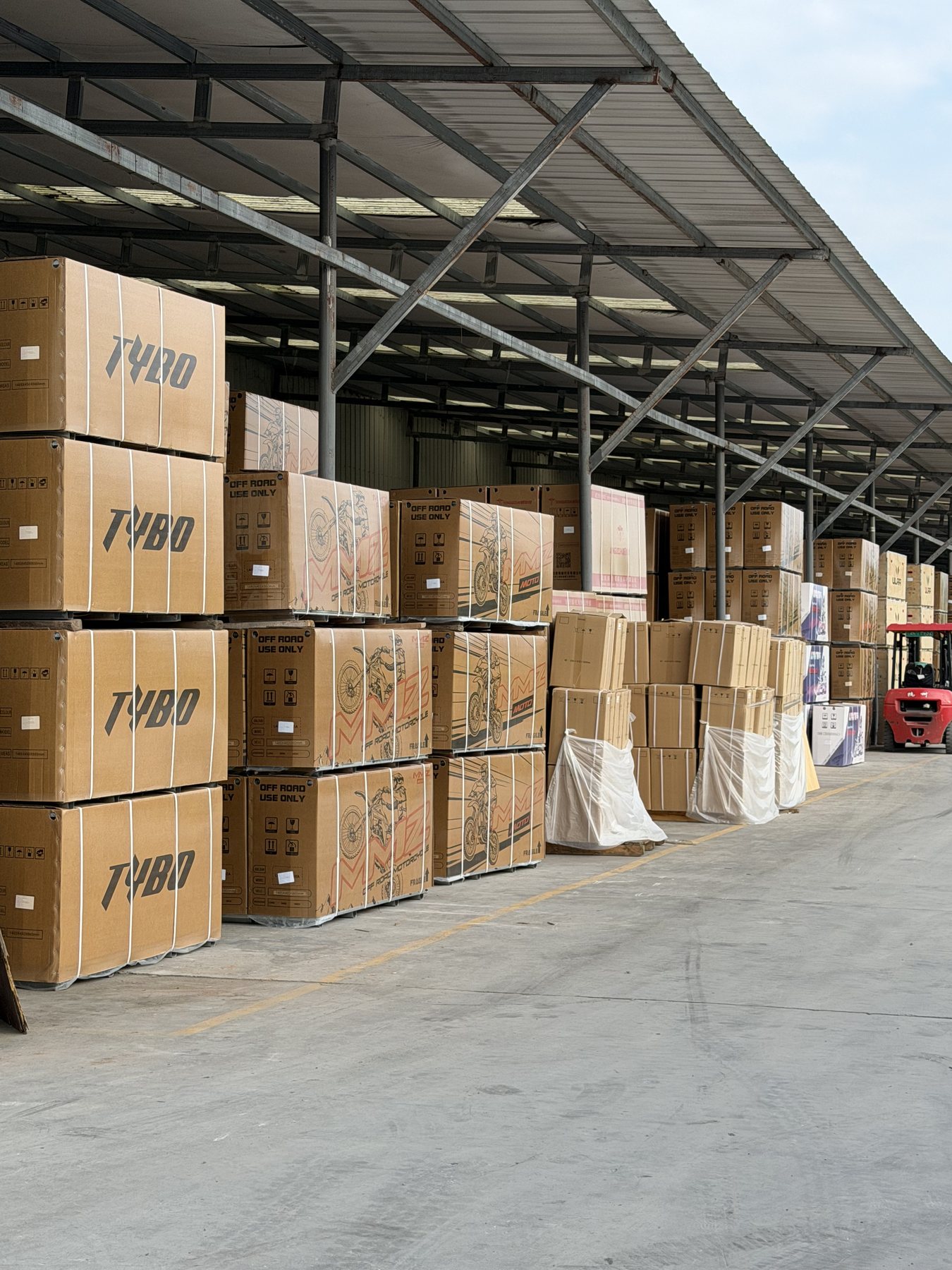
That order is useful, because it tells you what belongs in the container. A filter that fits the exact model, pre-filter skins treated as a consumable, bearing and seal pairs for both wheels, chain and sprocket sets sized to the model, and a radiator screen for liquid-cooled units. None of it is expensive. All of it is slow to air-freight once a customer is waiting at the counter.
A landing checklist for dust-heavy operation
| System | How dust attacks it | First-container action |
|---|---|---|
| Intake and filtration | Filter clogs, then dust passes an under-oiled element | Two filters per bike plus pre-filter skins; a cleaning station in the workshop, not at the customer’s house |
| Wheel and hub bearings | Grit passes the seal, play develops, the hub is ruined | Bearing and seal pairs in the first container; replace as a set, never one side |
| Chain and sprockets | Sand in the rollers stretches the chain and hooks the teeth | Chain and sprocket sets per model, plus a lubricant that does not hold grit |
| Cooling | Fins pack solid, the core stops shedding heat | Radiator screen, and a compressed-air cleaning step written into the pre-ride check |
| Electrical connectors | Dust and heat harden grease, contacts corrode | Dielectric grease at PDI, spare connectors, a spare regulator for the fleet |
| Fasteners and controls | Vibration plus grit loosens what thread lock missed | Spare levers and throttle tubes, and a torque check at every service |
Heat changes fluids and cooling loads, not just rider comfort
Two engine families need two different conversations. A liquid-cooled unit depends on a clean core, a working fan circuit, and coolant that a customer has not topped up with water. An air-cooled unit has no radiator to pack and no water pump to fail, which makes it the easier first fleet in a market where workshop discipline is still being built. That is a product-mix decision rather than a brand preference, and it is worth settling before the container is booked.
On fluids, the honest answer is that FCDC Motor does not issue oil brand advice. The grade and specification come from the workshop manual of the exact model you import, and the service interval should follow the inspection you actually perform rather than a calendar copied off a forum. A fixed interval handed over without a question about terrain is a guess.
The first-container mix, the demo unit, and what FCDC confirms
Two operational decisions decide whether the first year is calm. The parts kit is planned into the container at quotation because it occupies crate space and belongs in the loading plan, and the ratio logic behind that kit is documented in our spare parts ratio guide. The second is the demo unit: one or two prepaid samples ridden by your own staff through a season before you commit to a wholesale mix, with the reasoning behind that ladder set out in our demo unit strategy for a first showroom.
The internal question we ask a Gulf dealer before quoting is not about budget. It is: what is on your current failure list, and which of those parts did you air-freight last season? A dealer who answers that in two minutes has already done the analysis this article describes, and the quote gets built around his list instead of around a catalogue.
Four things then go into writing, before the deposit: the container loading plan for your model mix, the sample terms including the deduction rule, the document package that ships with the crate, and the lead time from deposit to vessel booking. The shipping sequence is set out on the shipping and delivery page, and the certificate route for each model is requested through the certificates page, which publishes the business licence and confirms product documents per exact model and destination rather than listing them publicly.
What FCDC Motor does not have is a warehouse, store or service network in Saudi Arabia or anywhere else in the Gulf. Parts move from China by container, and by courier when a line is urgent. A dealer who plans stock around that reality keeps customers; one who assumes a local depot exists finds out otherwise in his first busy month.
FAQ
Can spare parts ship in the same container as the bikes?
Yes, and they should be planned at quotation. The kit occupies crate space, so it changes the loading plan. Adding it after the container is closed means air freight and a wait.
Does FCDC Motor have a warehouse or service centre in Saudi Arabia?
No. FCDC Motor supplies from China, with parts moving by container or courier. There is no local depot or service network in the Gulf, and a supplier claiming one on a first call should be asked for the address.
Should a new dealer order a demo unit before a container?
Yes. One or two prepaid samples, run through a season, tell you which model fits your customers and which parts your terrain consumes. Wholesale volume should follow that evidence rather than precede it.
Start at Get Quote with the terrain you sell into, the models you are weighing and last season’s failure list. The container plan and the kit come back sized to those three answers.